
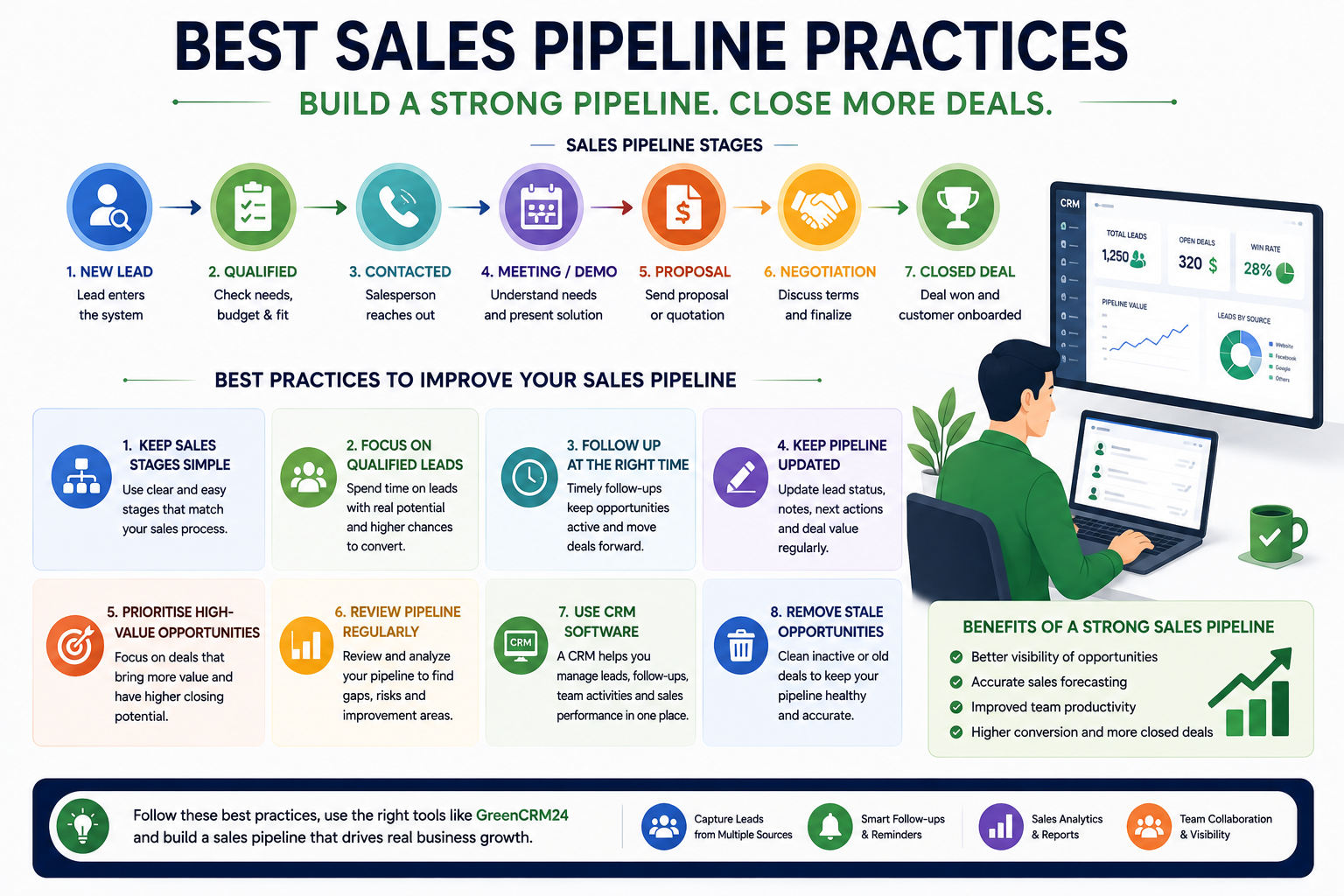
A sales pipeline gives your team a clear view of where potential customers are in the buying process. But simply having a pipeline is not enough. If leads are not followed up, stages are unclear, or information is outdated, opportunities can easily get stuck or lost. The good news is that improving your sales pipeline does not have to be complicated. A few simple practices can help your team stay organised, focus on the right opportunities, and move deals forward more efficiently.
1. Keep Your Sales Stages Simple
Your sales pipeline should reflect the actual buying process of your business. Common stages include New Lead, Qualified, Contacted, Meeting, Proposal, Negotiation, and Closed Deal.
Avoid creating too many stages. Your sales team should be able to understand exactly what each stage means and when a lead should move to the next one.
2. Focus on Qualified Leads
Not every lead has the same potential. Spending equal time on every enquiry can waste valuable sales time.
Qualify leads based on factors such as their requirements, budget, level of interest, decision-making authority, and expected buying timeline. This helps salespeople focus more attention on opportunities that are more likely to convert.
3. Follow Up at the Right Time
A good lead can become a lost opportunity simply because the follow-up was delayed.
Every active opportunity should have a clear next action, such as making a call, sending a proposal, scheduling a demo, or checking back with the customer. Setting reminders can help your team maintain consistent follow-ups instead of relying on memory.
4. Keep Your Pipeline Updated
An outdated pipeline can give managers the wrong picture of sales performance.
Whenever a lead is contacted, qualified, moved to another stage, won, or lost, update the information. Accurate pipeline data makes it easier to identify stuck deals and create more reliable sales forecasts.
5. Prioritise High-Value Opportunities
Not every deal deserves the same level of attention. Look at factors such as deal value, buying intent, customer requirements, and expected closing date when deciding which opportunities should receive priority.
This allows your sales team to spend more time on opportunities that can have a bigger impact on revenue.
6. Review Your Pipeline Regularly
A sales pipeline should not be something your team checks only at the end of the month.
Regular pipeline reviews can help managers identify deals that have been inactive for too long, understand where leads are dropping off, and determine where salespeople may need support. Monitoring metrics such as conversion rates, average deal size, sales cycle length, and pipeline value can also reveal areas for improvement.
7. Use CRM Software to Stay Organised
Managing a growing number of leads through spreadsheets, emails, and personal reminders can quickly become difficult.
A CRM brings important sales information into one place and can help teams manage leads, assign enquiries, schedule follow-ups, track interactions, and monitor sales performance.
For example, GreenCRM24 allows businesses to capture leads from Facebook Lead Ads, Google Forms, Shopify, websites, and landing pages. It also supports smart AI lead assignment, follow-up reminders, team visibility, and sales analytics.
8. Remove Stale Opportunities
Old opportunities can make your pipeline look healthier than it actually is.
If a prospect has stopped responding or there has been no meaningful activity for a long period, review the opportunity. Depending on the situation, you can close it, move it to a follow-up list, or create a future reminder.
Conclusion
A strong sales pipeline is not about having the largest number of deals. It is about having the right opportunities, clear stages, consistent follow-ups, and accurate information.
By keeping your pipeline simple, qualifying leads, reviewing opportunities regularly, and using CRM software to organise your sales activities, your team can work more efficiently and create a smoother path from lead to customer.