
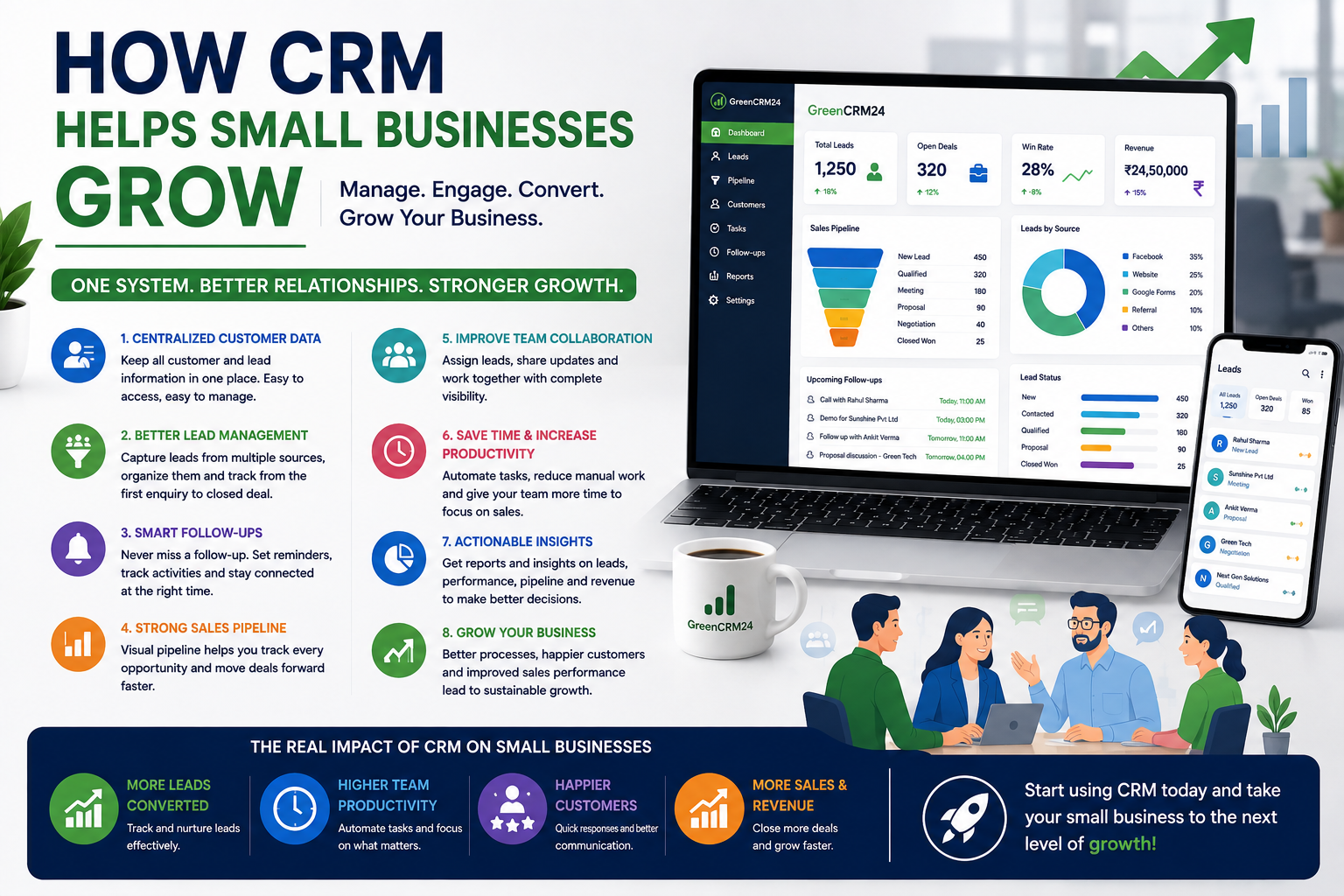
Running a small business involves managing sales, enquiries, and customer follow-ups. A CRM system brings all customer and lead information into one place, helping businesses stay organised, manage relationships, and improve sales.
1. Keeps Customer Information in One Place
One of the biggest benefits of CRM software is having customer information in one place. Instead of searching through different files and conversations, your team can quickly find lead details, previous interactions, notes, and follow-up information.
This gives salespeople a clearer understanding of each customer before starting a conversation.
2. Helps Manage Leads Better
Small businesses may receive leads from websites, social media, advertisements, forms, referrals, and other sources. Managing all these leads manually can become difficult as the business grows.
A CRM helps capture and organise leads so sales teams can track them from the first enquiry to the final purchase. GreenCRM24, for example, supports lead capture from Facebook, Google Forms, Shopify, manual entries, and Excel uploads.
3. Makes Follow-Ups Easier
Following up at the right time can make a big difference in sales. However, when a team manages many leads, remembering every follow-up can be challenging.
CRM software helps salespeople keep track of follow-ups, notes, and lead status. This reduces the chances of forgetting potential customers and helps create a more consistent sales process.
4. Improves Sales Pipeline Management
A CRM gives businesses a clear view of their sales pipeline. Salespeople can see which leads are new, which have been contacted, which are under discussion, and which are close to becoming customers.
This also helps managers understand where deals are getting stuck and where the team needs to focus. GreenCRM24 provides pipeline management tools designed to help teams track opportunities through different stages.
5. Helps Teams Work Together
As a small business grows, more people may become involved in sales. Without a central system, it can be difficult to know who is handling a particular lead.
A CRM can help assign leads to team members and provide visibility into lead ownership and activity. GreenCRM24, for instance, includes lead assignment and real-time visibility into lead ownership and performance.
6. Saves Time on Manual Work
Small teams have limited time, so reducing repetitive tasks can be valuable. CRM software can help organise lead information, automate certain sales activities, and reduce the need to maintain multiple spreadsheets.
This allows salespeople to spend more time talking to customers and less time searching for information.
7. Provides Useful Sales Insights
A CRM can also help business owners understand what is happening in their sales process. Reports and dashboards can show information such as active leads, sales opportunities, team performance, and pipeline activity.
These insights can help owners make decisions based on actual sales data rather than assumptions.
How GreenCRM24 Can Help
For small and growing teams, GreenCRM24 combines lead capture, lead assignment, follow-up management, pipeline tracking, and sales visibility in one platform. It is designed to help teams manage leads from multiple sources and keep sales activities organised.
Conclusion
A CRM is more than just a place to store customer details. For a small business, it can become a central system for managing leads, improving follow-ups, organising sales activities, and building stronger customer relationships.
As your business grows, having the right CRM process in place can help your team stay organised and focus on what matters most — turning opportunities into customers and building long-term relationships