
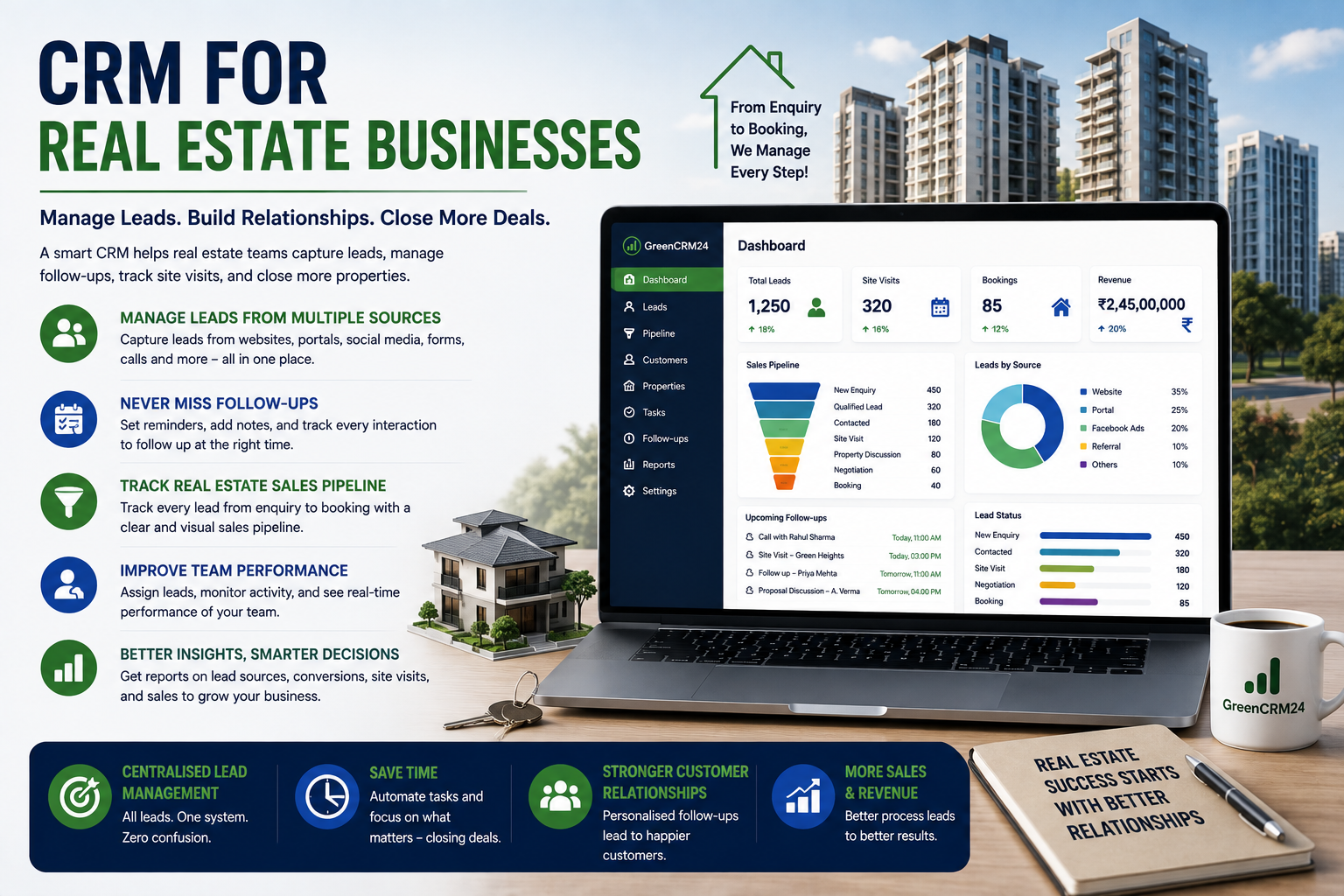
Real estate sales involve more than showing properties and closing deals. Teams often handle enquiries from websites, social media, property portals, phone calls, and referrals. With so many leads coming from different sources, keeping track of every customer and follow-up can become difficult.
Why Do Real Estate Businesses Need a CRM?
Real estate customers usually take time to make a purchase decision. A prospect may enquire about a property today, schedule a site visit next week, negotiate later, and make a booking after several conversations.
Without proper tracking, leads can easily be forgotten or followed up too late.
A CRM gives sales teams a clear view of every opportunity and helps them understand what happened, what needs to happen next, and who is responsible for the lead.
1. Manage Leads from Multiple Sources
Real estate leads can come from Facebook Ads, websites, Google Forms, property portals, referrals, phone calls, and other marketing activities.
Instead of managing these leads separately, a CRM can bring them into one system. GreenCRM24 supports lead capture from sources such as Facebook, Google Forms, Shopify, manual entry, and Excel uploads.
This makes it easier for sales teams to organise enquiries and start follow-ups quickly.
2. Never Miss Important Follow-Ups
Follow-up is one of the most important parts of real estate sales. A customer who is not ready to buy today may still become a buyer later.
CRM software helps salespeople keep track of previous conversations, notes, and upcoming follow-ups. This creates a more consistent process instead of relying on memory or scattered spreadsheets.
3. Track the Real Estate Sales Pipeline
A real estate sales pipeline can include stages such as:
New Enquiry → Qualified Lead → Contacted → Site Visit → Property Discussion → Negotiation → Booking
Having these stages clearly organised helps salespeople understand where each prospect stands.
It also helps managers identify where leads are getting stuck and which opportunities need immediate attention.
4. Improve Team Lead Management
Real estate companies often have multiple sales executives working on different leads. Without clear lead ownership, two salespeople may contact the same customer while another lead receives no attention.
A CRM can help assign leads to the right salespeople and provide visibility into lead ownership and performance. GreenCRM24 includes lead assignment and real-time visibility into lead status and team performance.
5. Keep Customer Information Organised
A real estate salesperson may need to remember a customer's preferred location, budget, property type, previous discussions, and site-visit details.
Keeping this information inside a CRM makes it easier to continue the conversation with proper context. It also means customer information is not dependent on one salesperson's personal notes or phone.
6. Understand Sales Performance
A CRM can provide useful information about your sales process, including active leads, opportunities, follow-ups, and team performance.
These insights can help managers understand which lead sources are performing well and where improvements may be needed.
How GreenCRM24 Can Help Real Estate Teams
For real estate businesses looking for a simple way to manage high volumes of enquiries, GreenCRM24 brings lead capture, assignment, follow-ups, pipeline management, and sales visibility into one platform.
Instead of switching between spreadsheets, forms, and different tools, sales teams can manage important lead information from a central dashboard.
Conclusion
A CRM for real estate businesses is not simply a database for storing customer details. It can become an important part of the sales process by helping teams capture leads, manage follow-ups, track site-visit opportunities, organise sales pipelines, and improve team visibility.
For growing real estate businesses, having a structured CRM process can help reduce missed opportunities and create a smoother journey from property enquiry to successful booking.