
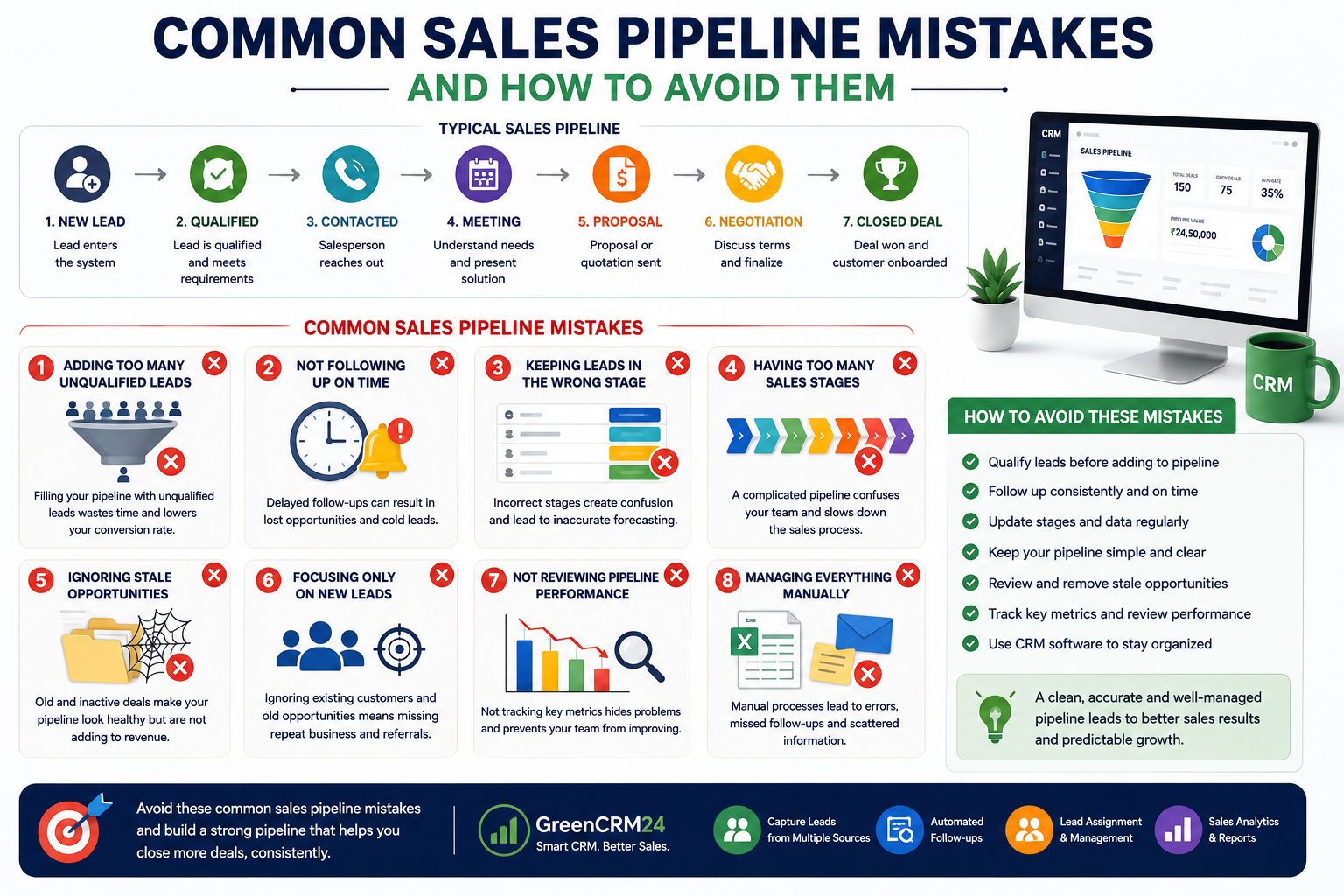
A sales pipeline helps your team understand where potential customers are in the buying process. But simply having a pipeline does not guarantee better sales results. If leads are not qualified, follow-ups are missed, or pipeline information is outdated, valuable opportunities can easily slip away. The good news is that most sales pipeline problems can be avoided with a few simple practices.
1. Adding Too Many Unqualified Leads
One of the most common mistakes is filling the pipeline with every enquiry without checking whether the person is actually a good fit.
A large number of leads may look impressive, but unqualified leads can make your pipeline difficult to manage and waste your sales team's time. Focus on factors such as customer needs, budget, interest, and buying timeline before moving an opportunity forward.
2. Not Following Up on Time
A lead can lose interest when there is a long gap between conversations. This is especially common when salespeople manage follow-ups manually.
Every active opportunity should have a clear next action. Follow-up reminders can help your team stay consistent and prevent promising leads from going cold.
3. Keeping Leads in the Wrong Stage
Another common problem is not updating the pipeline when a lead moves forward.
For example, a customer who has already received a proposal should not still appear under “New Lead.” Incorrect stages make it harder for sales managers to understand the real condition of the pipeline and can affect forecasting.
4. Having Too Many Sales Stages
A complicated pipeline can confuse your sales team. If there are too many stages with unclear definitions, salespeople may not know when an opportunity should move forward.
Keep your pipeline simple and make sure every stage has a clear purpose.
5. Ignoring Stale Opportunities
Some deals stay in the pipeline for weeks or months without any meaningful activity. Keeping these opportunities active can make the pipeline look healthier than it really is.
Review old opportunities regularly. If a customer is no longer interested, close the opportunity or move it into an appropriate follow-up process. A clean pipeline gives your team a more accurate view of real opportunities.
6. Focusing Only on New Leads
Sales teams sometimes focus so heavily on generating new leads that they forget about existing customers and older opportunities.
Previous customers can create opportunities for repeat purchases, upgrades, referrals, or additional services. Your sales pipeline should support both new and existing customer relationships.
7. Not Reviewing Pipeline Performance
A pipeline should be reviewed regularly, not just when sales numbers are low.
Track useful metrics such as conversion rate, win rate, deal value, sales cycle, and pipeline value. These numbers can help you identify where deals are getting stuck and where your sales process needs improvement.
8. Managing Everything Manually
Using spreadsheets, emails, notes, and different applications to manage leads can quickly become difficult as your business grows.
A CRM can bring lead information, sales activities, follow-ups, and pipeline stages into one place. GreenCRM24, for example, provides tools for lead capture, sales pipeline management, automated follow-ups, lead assignment, and sales analytics.
Conclusion
A healthy sales pipeline is not about having the highest number of leads. It is about having the right opportunities, accurate information, timely follow-ups, and a clear sales process.
By avoiding common mistakes such as poor lead qualification, missed follow-ups, outdated stages, and stale opportunities, your sales team can work more efficiently and focus on deals that have a real chance of closing.
With the right CRM and consistent pipeline management, businesses can create a more organised path from lead to customer and make better sales decisions.