
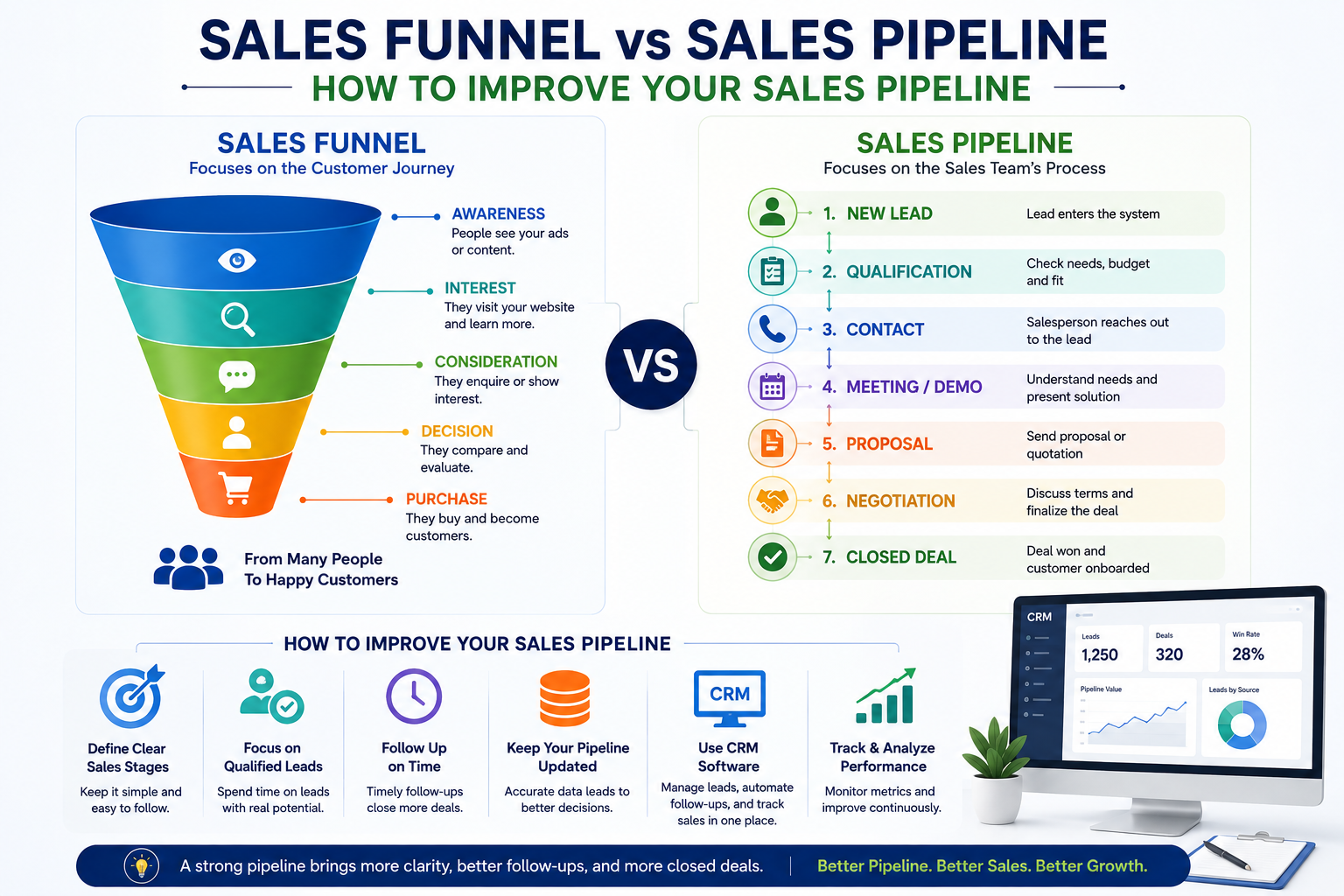
If you work in sales or marketing, you may have heard the terms sales funnel and sales pipeline. Although they are closely connected, they describe different parts of the sales process. A sales funnel focuses on the customer's journey, while a sales pipeline focuses on how the sales team manages and moves potential deals toward closing. Understanding both can help businesses manage leads more effectively and improve sales performance.
What Is a Sales Funnel?
A sales funnel represents the journey a potential customer takes before becoming a customer. It usually starts with a large number of people and gradually becomes smaller as people move closer to making a purchase.
A typical sales funnel includes:
Awareness → Interest → Consideration → Decision → Purchase
For example, 1,000 people may see an advertisement, 200 may visit your website, 50 may enquire, and 10 may finally become customers.
The funnel helps businesses understand where potential customers are dropping off and which stages need improvement.
What Is a Sales Pipeline?
A sales pipeline looks at the sales process from the salesperson's perspective. It tracks individual opportunities and shows what needs to happen next.
A typical pipeline may include:
New Lead → Qualification → Contact → Meeting → Proposal → Negotiation → Closed Deal
For example, after receiving a lead, a salesperson may qualify the prospect, schedule a meeting, send a proposal, answer questions, negotiate pricing, and close the deal.
In simple terms, the sales funnel focuses on people, while the sales pipeline focuses on deals.
Why Do You Need Both?
Using a sales funnel and sales pipeline together gives businesses a better understanding of the complete sales process.
The funnel helps marketing teams understand customer behaviour and conversion rates. The pipeline helps sales teams manage individual leads, plan follow-ups, and identify which opportunities are most likely to close.
When both work together, businesses can identify problems earlier and improve the journey from first interaction to final purchase.
How to Improve Your Sales Pipeline
A healthy sales pipeline is not simply about having more leads. It is about keeping the right opportunities moving forward.
1. Define Clear Sales Stages
Create simple stages that match your actual sales process. Avoid adding unnecessary stages that make the pipeline confusing.
2. Focus on Qualified Leads
Not every lead has the same potential. Consider factors such as customer requirements, budget, interest, and buying timeline before spending too much time on an opportunity.
3. Follow Up on Time
Good leads can be lost when follow-ups are delayed. Set reminders and make sure every active opportunity has a clear next action.
4. Keep Your Pipeline Updated
Regularly update lead status, conversations, deal value, and follow-up information. An outdated pipeline can lead to missed opportunities and inaccurate sales forecasts.
5. Use CRM Software
Managing a growing number of leads through spreadsheets can become difficult. A CRM can bring lead information, sales activities, follow-ups, and pipeline stages into one place.
For example, GreenCRM24 helps businesses capture leads from sources such as Facebook Lead Ads, Google Forms, Shopify, websites, and landing pages, while also providing lead assignment, follow-up reminders, sales analytics, and team visibility.
Final Thoughts
The difference between a sales funnel and sales pipeline is simple: the funnel shows how customers move toward a purchase, while the sales pipeline management shows how sales teams move opportunities toward closing.
By defining clear stages, qualifying leads, following up consistently, keeping data updated, and using the right CRM, businesses can build a more organised sales process and improve their chances of closing more deals.