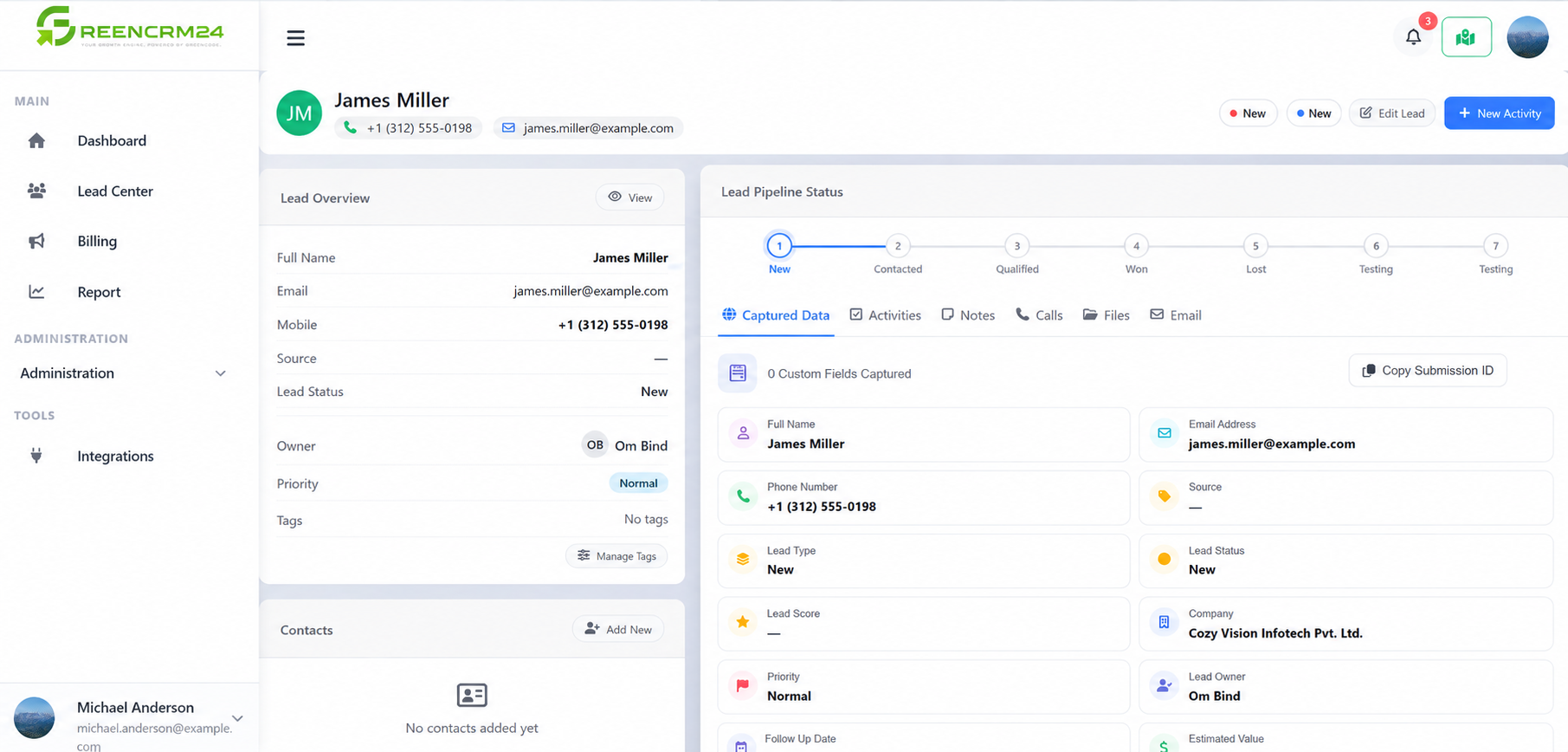
A sales pipeline is a visual way to track where your leads or sales opportunities are in the buying process. It helps your sales team understand which leads are new, which ones need follow-up, and which opportunities are close to conversion. GreenCRM24 provides sales pipeline tools for tracking opportunities through different sales stages.
Common Sales Pipeline Stages
A typical pipeline may include:
New Lead → Qualified → Contacted → Meeting/Demo → Proposal → Negotiation → Closed Deal
Each stage represents a step in your sales process. As a lead progresses, your team can update its stage and keep the pipeline information current.
Why Is a Sales Pipeline Important?
A well-managed pipeline helps your team:
- See the current status of every opportunity.
- Prioritize leads that need immediate attention.
- Plan timely follow-ups.
- Identify opportunities that are getting stuck.
- Understand expected sales and team performance.
GreenCRM24 also supports custom pipelines, deal tracking, sales stages, activity history, tasks, reminders, and status tracking, helping teams manage the complete sales process from one platform.
Tip: Keep your pipeline updated after every important customer interaction. Accurate stages and regular follow-ups give your team a clearer picture of your sales opportunities and help prevent potential deals from being missed.